Project-Based Accounting: How to Monitor Site and Project Profitability
What is Project Accounting?

Each project carries its own profit and loss, tracked on its own.
Project accounting follows revenue and expenses per project, site, or work package rather than across the company as a whole. Where calendar-based accounting watches the clock, project accounting watches the job: it tracks a project’s finances across its whole life, from the first day to handover.
The core characteristics of this approach include:
- Project profit center: Each project is treated as an independent profit/loss center.
- Cost allocation: All costs are assigned to specific projects or work packages.
- Revenue matching: Revenue is recognized in the same period as the associated costs.
- Lifecycle tracking: The project is monitored financially from start to finish.
- Profitability visibility: Current profitability can be reported at any time.
Why is Project Accounting Necessary?
In project-based sectors (construction, engineering, consulting, software development), calendar-based accounting falls short:
Limitations of Calendar-Based Accounting
- What does the year-end mean for a 24-month project?
- What does the total profit of 15 different projects in the same period tell us?
- How do we identify which project is profitable and which is losing money?
- How do we detect cost overruns in work-in-progress?
Benefits of Project Accounting
- Independent profit/loss status for every project
- Early warning signs for cost overruns within projects
- Realistic completion projections (EAC)
- Progress billing and cash flow management
- Project-based decision making
Core Concepts
Before we go any further, a few terms are worth pinning down:
- WBS (Work Breakdown Structure): The hierarchical work package structure of the project.
- Cost Center: An organizational unit where costs are aggregated.
- Cost Element: Types of costs (labor, material, subcontracting, etc.).
- Budget: Planned cost and revenue values.
- Actual: Realized cost and revenue values.
- Commitment: Costs that have been committed but not yet realized.
- EAC (Estimate at Completion): The estimated total cost at the end of the project.
- ETC (Estimate to Complete): The estimated cost of the remaining work.
- POC (Percentage of Completion): The percentage of work completed.
Project Accounting vs. Cost Accounting
The two get confused, but they are not the same. Cost accounting works out the unit cost of a product or service; project accounting tracks the financial performance of one specific project. On a construction job you need both: cost accounting for unit price calculations, project accounting for project profitability.
WBS – Work Breakdown Structure Design

Breaking the project into manageable work packages is the price of control.
WBS (Work Breakdown Structure) breaks a project’s deliverables down, level by level, into smaller and manageable pieces. In project accounting it is the skeleton everything else hangs on: all cost aggregation and reporting sits on top of it, so a weak WBS gives you weak reports.
WBS Design Principles
1. The 100% Rule
The WBS has to cover the whole project—no more, no less. Each work package should add up to 100% of its parent level.
2. Mutually Exclusive
Work packages must not overlap. The same work should never land in two packages at once, or you will argue endlessly about where a cost belongs.
3. Manageable Size
A work package should be sized so you can track it, assign it, and measure it. Neither huge nor pointlessly tiny.
4. Result-Oriented
Define WBS elements by the deliverable or result they produce, not by the activity.
WBS Levels
A typical construction project WBS looks like this:
| Level | Definition | Example |
|---|---|---|
| Level 0 | Project | XYZ Factory Construction |
| Level 1 | Phase / Main Section | Structural, Finishing, Mechanical, Electrical |
| Level 2 | Work Package Group | Foundation, Column-Beam, Slab |
| Level 3 | Work Package | Foundation Excavation, Concrete Pouring, Ironwork |
| Level 4 | Work Unit | Block A Foundation Excavation, Block B Foundation Excavation |
WBS Coding System
Establish an effective WBS coding system:
- Hierarchical code: 1.0 > 1.1 > 1.1.1 > 1.1.1.1
- Project prefix: PRJ001-1.1.1
- Phase/area indicator: STR (Structural), FIN (Finishing), MEC (Mechanical)
Example coding: PRJ001-STR-01-003
- PRJ001: Project code
- STR: Structural phase
- 01: Foundation work package group
- 003: Concrete pouring work package
WBS and Accounting Integration
The WBS is wired straight into the accounting system:
- Cost collection point: Every WBS element collects costs.
- Budget allocation: Budgets are assigned to WBS levels.
- Actual cost: All expenses are recorded against the WBS element.
- Comparison: Budget vs. Actual analysis is performed on a WBS basis.
- Reporting: Consolidation is possible at any desired level.
WBS Design Error
A WBS that is too complex or too simple both cause trouble. Push it to 7+ levels and tracking becomes a chore that generates its own admin burden; drop it to 2 levels and there is nothing meaningful left to analyze. In practice a 3-5 level WBS, sized to the project, is the one that actually earns its keep.
Cost Center and Chart of Accounts Structure

The cost center structure is where financial tracking of projects begins.
A cost center is the organizational unit where costs are collected and controlled. In project accounting, each project, site, or job is usually set up as its own cost center.
Cost Center Hierarchy
A typical project organization stacks its cost centers like this:
- Level 1 – Company: The top level where all costs are consolidated.
- Level 2 – Business Unit: Lines of business such as Construction, Contracting, Real Estate.
- Level 3 – Project Group: Grouping by region, client, or project type.
- Level 4 – Project: Individual project or site.
- Level 5 – Sub-Project: A phase or section within a project.
Chart of Accounts Design
Build the chart of accounts so it captures cost elements cleanly:
Direct Costs
- 510 – Material Expenses
- 510.01 – Construction Materials
- 510.02 – Electrical Materials
- 510.03 – Mechanical Materials
- 510.04 – Consumables
- 520 – Labor Expenses
- 520.01 – Direct Labor
- 520.02 – Overtime
- 520.03 – Social Benefits
- 530 – Subcontractor Expenses
- 530.01 – Structural Subcontractors
- 530.02 – Mechanical Subcontractors
- 530.03 – Electrical Subcontractors
- 540 – Equipment/Machinery Expenses
- 540.01 – Rented Equipment
- 540.02 – Owned Equipment Depreciation
- 540.03 – Fuel and Maintenance
Indirect Costs
- 550 – Site General Expenses
- 550.01 – Site Management Personnel
- 550.02 – Site Facilities
- 550.03 – Health and Safety
- 560 – General Administrative Overheads
- 560.01 – Head Office Overhead Allocation
- 560.02 – Insurance Expenses
Cost Allocation Rules
Set clear rules for getting costs onto the right project and WBS element:
- Direct costs: Assigned directly to the specific project.
- Common costs: Distributed using allocation keys.
- Overheads: Applied using a pre-determined rate or formula.
Allocation Keys
- Direct labor hour rate
- Direct cost ratio
- Revenue ratio
- Square meter ratio
Commitment Tracking
Track committed costs, not just realized ones. The moment a purchase order goes out, the amount lands as a commitment; when the invoice arrives it turns into an actual. That way your total cost exposure (Actual + Commitment + ETC) stays visible at all times, and invoices stop catching you off guard.
Revenue Recognition Methods and Percentage of Completion

Get revenue recognition right and project profitability reads true.
In project accounting, revenue recognition decides when a project reports revenue and how much of it. On jobs that stretch over months or years, that decision is one of the most consequential accounting policies you make.
Core Revenue Recognition Methods
1. Percentage of Completion (POC) Method
The POC method recognizes revenue gradually as the project moves forward:
- Revenue is recognized in each period as the project progresses.
- Revenue and cost land in the same period.
- Profitability can be reported in every period.
- It is the preferred method under accounting standards (IFRS 15).
2. Completed Contract Method
The Completed Contract method holds all revenue back until the project is finished:
- Revenue is reported only when the project is completed.
- Profitability is invisible for the duration of the project.
- Can make sense on projects with high uncertainty.
- A conservative approach.
Percentage of Completion Calculation Methods
Cost-to-Cost
The most commonly used method:
Completion % = Actual Cost / Estimated Total Cost x 100
- Advantage: Objective and verifiable.
- Disadvantage: Cost overruns push completion up artificially.
Units Delivered
Physical progress measurement:
Completion % = Units Completed / Total Units x 100
- Advantage: Reflects physical progress.
- Disadvantage: Fine for uniform work, awkward on complex projects.
Milestone-Based
Based on milestone completion:
- Advantage: Captures the big stages clearly.
- Disadvantage: High fluctuation between periods.
Revenue Recognition Formula
Revenue recognized in each period comes out as:
Revenue in Period = (Total Contract Value x Cumulative Completion %) – Total Revenue Recognized in Previous Periods
Example calculation:
- Contract value: 100 units
- Estimated total cost: 80 units
- Actual cost at period end: 40 units
- Completion %: 40 / 80 = 50%
- Recognized revenue: 100 x 50% = 50 units
- Recognized cost: 40 units
- Gross profit: 10 units
Revenue Recognition Risks
The percentage of completion method is only as good as your estimated total cost. Optimistic estimates book profit early; unrealistic projections come back as large losses at the end of the job. That is exactly why EAC update discipline is non-negotiable.
Progress Billing Process

The progress billing process is the backbone of project cash flow.
Progress billing is the staged payments you claim from the employer or client against work already done. Standard practice on construction jobs, it sets the rhythm of your cash flow directly.
Types of Progress Billing
Progress Payment
- Performed periodically (usually monthly).
- Based on measuring and evaluating the work done.
- Withholding tax is usually applied (5-10%).
Final Payment
- Performed when the project is completed.
- All work items are closed.
- Withholdings are released.
Steps in the Progress Billing Process
- Measurement: Physical measurement of the work performed.
- Evaluation: Calculation of total value using unit prices.
- Report Preparation: Creating the report with supporting documents.
- Internal Approval: Project manager and finance approval.
- Client Presentation: Submitting the billing file.
- Client Review: Technical review and approval.
- Invoicing: Issuing the invoice for the approved amount.
- Collection Tracking: Due date tracking and collection.
Progress Billing Performance Metrics
- Billing Cycle Time: Time from measurement date to billing submission.
- Approval Time: Time from submission to client approval.
- Collection Time: Time from invoice to collection.
- DSO (Days Sales Outstanding): Number of days for billing receivables.
- Withholding Accumulation: Total pending withholding amount.
Relationship Between Billing and Revenue Recognition
Issuing a progress invoice and recognizing revenue are two different things:
- Progress Billing: Amount requested from the client (invoicing).
- Revenue Recognition: Revenue recognized according to accounting standards.
The two figures can diverge:
- Billing > Recognized Revenue: Contract liability (deferred revenue).
- Billing < Recognized Revenue: Contract asset (unbilled revenue).
Billing Optimization
Don’t let the billing process run loose: plan the billing calendar ahead, standardize your measurement documentation, and keep the client relationship warm. Every day of delay turns straight into financing cost. Run it proactively and the cash flow eases up with it.
EAC/ETC Calculations and Projections
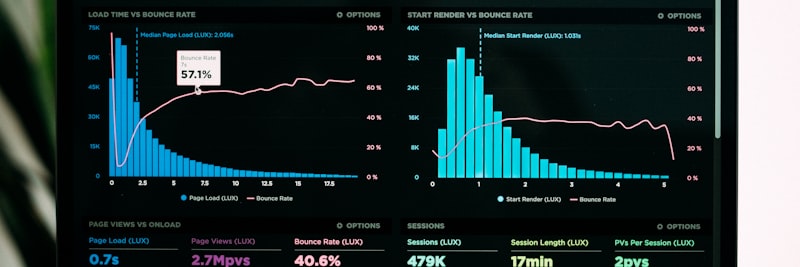
EAC/ETC is how you see the end-of-project picture from where you stand today.
The sharpest question in project accounting is “where will we be at the end?” That is precisely what EAC (Estimate at Completion) and ETC (Estimate to Complete) calculations answer.
Core Concepts
- BAC (Budget at Completion): Original total budget.
- AC (Actual Cost): Cost realized to date.
- EV (Earned Value): The budget value of the work performed.
- PV (Planned Value): The budget value of the work that should have been performed.
- ETC (Estimate to Complete): Estimated cost of remaining work.
- EAC (Estimate at Completion): Estimated total cost at the end of the project.
- VAC (Variance at Completion): Budget – EAC difference.
Performance Indices
CPI (Cost Performance Index)
CPI = EV / AC
- CPI > 1: Under budget (good).
- CPI = 1: On budget.
- CPI < 1: Over budget (bad).
SPI (Schedule Performance Index)
SPI = EV / PV
- SPI > 1: Ahead of schedule.
- SPI = 1: On schedule.
- SPI < 1: Behind schedule.
ETC Calculation Methods
Method 1: Based on Original Estimate
Assumes the remaining work finishes within the original budget:
ETC = BAC – EV
Method 2: Based on Current Performance
Assumes current cost performance carries on unchanged:
ETC = (BAC – EV) / CPI
Method 3: Detailed Re-estimation
Re-prices the remaining work packages one by one:
ETC = Updated estimate for each work package
EAC Calculation Formulas
Basic EAC
EAC = AC + ETC
CPI-Based EAC
EAC = AC + (BAC – EV) / CPI
or
EAC = BAC / CPI
CPI and SPI-Based EAC
Taking both cost and schedule performance into account:
EAC = AC + (BAC – EV) / (CPI x SPI)
Example Calculation
| Parameter | Value |
|---|---|
| BAC (Total Budget) | 1,000 units |
| AC (Actual) | 450 units |
| EV (Earned Value) | 400 units |
| CPI | 400 / 450 = 0.89 |
| ETC (CPI-based) | (1,000 – 400) / 0.89 = 674 units |
| EAC | 450 + 674 = 1,124 units |
| VAC | 1,000 – 1,124 = -124 units (Overrun) |
Comment: The project is 40% complete, but a CPI of 0.89 already points to a budget overrun. Keep this pace up and the budget ends the project 12.4% over.
EAC Update Discipline
- EAC should be updated at least monthly.
- Update it immediately on any significant change (scope, risk).
- Do the detailed analysis at the WBS level.
- Document the update history and the reasoning behind it.
EAC Manipulation Risk
Because EAC rests on subjective estimates, it is easy to game. A project manager who would rather not deliver bad news can quietly lean optimistic. Independent review, comparison against past performance, and transparent reporting are what keep that in check.
Field Example: Project Accounting Implementation

Situation
A construction contracting firm with 120 employees was running 8 projects at once. Project profitability only surfaced at completion, and some projects turned out to be losing money without anyone noticing until closing. The Excel-based tracking couldn’t keep up, and late progress billings were squeezing cash flow.
Steps Taken
- Weeks 1-3: The current state was laid out on the table. The WBS of all 8 projects was reviewed—only 2 had a meaningful one. Cost allocation rules were vague, and overheads were being distributed at random.
- Weeks 4-6: A standard 4-level WBS template was created, and every project was given a retrospective WBS.
- Weeks 7-10: The cost center structure was redesigned. Each project became a separate cost center, with WBS elements as sub-cost centers.
- Weeks 11-14: The chart of accounts was updated. 45 cost elements were defined (material, labor, subcontractor, equipment, and so on), and allocation keys were set.
- Weeks 15-18: The project accounting module in the ERP was configured. Budgets were loaded at the WBS level and cost allocation rules were written into the system.
- Weeks 19-22: The billing process went digital. A mobile measurement app was rolled out and the billing approval workflow was set up in the system.
- Weeks 23-26: An EAC/ETC reporting system was established. The monthly project performance report format was fixed and dashboards were built.
Results (Representative)
- Project profitability visibility: Moved from project completion to monthly tracking.
- Cost allocation accuracy: Rose from 65% to 92%.
- Billing preparation time: Down from 12 working days to 5.
- Billing collection time: Down from an average of 45 days to 32.
- EAC projection accuracy: 85% accurate in the first 6 months.
- Early warnings: Cost overrun risk was caught early on 3 projects.
Critical Success Factors
- Senior management’s demand for and commitment to project-based reporting.
- Standardizing the WBS and rolling it out across every project.
- Digitizing field data collection.
- The monthly EAC review discipline.
- Training and ownership by project managers.
7 Most Common Project Accounting Mistakes
1. Working Without a WBS
Aggregating costs at the project level and never tracking them down to the work package. The result: you can’t say where the overrun is, only that “the project came in expensive.” Without a WBS, meaningful analysis is impossible.
2. Incorrect Cost Allocation
Booking costs to whichever project is easiest instead of using allocation keys. Some projects look more profitable than they are, others look like losses. Either way, the real profitability disappears.
3. Not Tracking Commitments
Watching only realized costs and ignoring what’s already committed. Materials that are ordered but not yet invoiced stay off the radar, and “surprise” costs land at the end of the month.
4. Neglecting EAC Updates
Setting the estimate at the start and never touching it again. Twelve months into an 18-month job you’re still comparing against the original budget, with no realistic projection in sight.
5. Revenue-Cost Matching Error
Recognizing revenue when the bill goes out and cost when the invoice comes in. Periodic profitability reports turn misleading, and you fall out of line with the accounting standards.
6. Ignoring Overhead Distribution
Assigning only direct costs to projects and never distributing overheads. Projects look profitable on paper while the company as a whole runs a loss—and pricing decisions get made on that false picture.
7. Not Linking Billing to Cash Flow
Treating billing as a pure accounting chore, cut off from the cash flow projection. Billing delays snowball into a financing crunch, and nobody steps in ahead of time.

These mistakes wipe out profitability visibility entirely.
Project Profitability Metrics Table
To gauge how well your project accounting system—and your projects—are doing, track the following metrics:
| Metric | Baseline | Target | Measurement Method |
|---|---|---|---|
| Gross Profit Margin | Baseline | 15-25% | (Revenue – Direct Cost) / Revenue x 100 |
| CPI (Cost Performance Index) | 1.0 | 1.0 or higher | EV / AC |
| SPI (Schedule Performance Index) | 1.0 | 1.0 or higher | EV / PV |
| Cost Allocation Accuracy | 70% | 95%+ | Correctly allocated cost / Total cost |
| EAC Projection Accuracy | 60% | 90%+ | Difference between EAC and Final Realized Cost |
| Billing Preparation Time | 12 working days | 5 working days | From measurement to billing submission |
| DSO (Billing Collection Time) | 60 days | 30 days | Days from invoice to collection |
| Budget Overrun Rate | 25% | Under 5% | (EAC – BAC) / BAC x 100 |
Measurement frequency: Track CPI/SPI and EAC weekly, profitability metrics monthly, and DSO weekly. Aim for real-time visibility on the dashboards.
Project Accounting Checklist
Work through the following items as you set up and run your project accounting system:
- Is a standard WBS template defined?
- Has a WBS coding system been established?
- Has a WBS been created for all projects?
- Are WBS levels appropriate for reporting needs?
- Is the cost center hierarchy defined?
- Has a cost center been opened for each project?
- Are cost elements (chart of accounts) defined?
- Have cost allocation rules been established?
- Are overhead allocation keys defined?
- Are project budgets loaded at the WBS level?
- Is commitment tracking active?
- Has a budget revision procedure been established?
- Are approval limits and authorities defined?
- Has a revenue recognition policy been established?
- Has a percentage of completion calculation method been selected?
- Is the billing process documented?
- Has a measurement system been established?
- Are billing approval workflows defined?
- Has an EAC/ETC calculation method been determined?
- Is there a monthly EAC update procedure?
- Has a project profitability report format been determined?
- Have dashboard/visualization tools been set up?
- Is a variance analysis procedure defined?
- Is the ERP/accounting system configuration complete?
- Are integrations (field systems, etc.) established?
- Has user training been provided?
- Are project managers proficient in the system?
Frequently Asked Questions (FAQ)
Get Support for Your Project
I can help guide your digital transformation initiative. Book a free preliminary call to discuss your priorities.