Traceability in Defense and Aerospace: Serial-Lot-Certificate Architecture
Why Is Traceability So Critical?
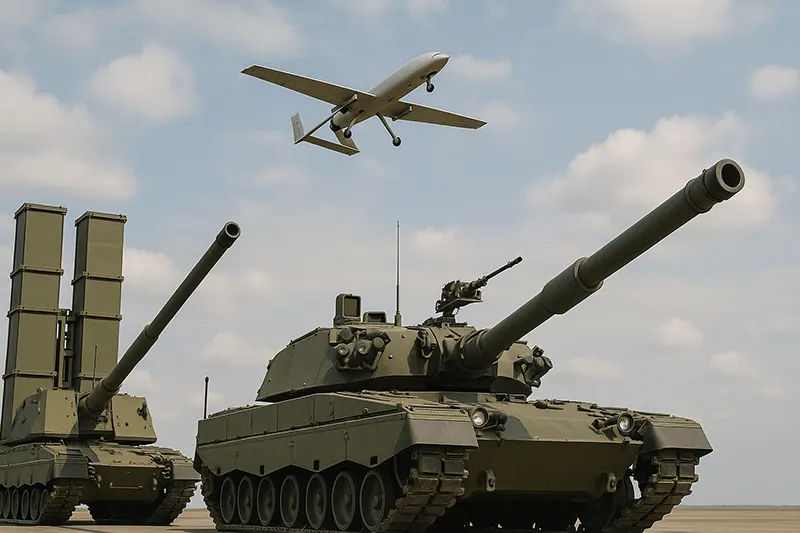
In the aerospace sector, every component can be a vital part of a life-critical system
Why does traceability in defense and aerospace work so differently from standard manufacturing? It comes down to three things:
1. Safety and Human Life
When an automotive part fails, you might be left stranded on the road. When an aircraft part fails, the consequences can be far more severe. Therefore, every part, every material, and every process must be recorded. When an issue is detected, we must be able to determine within minutes which aircraft used material from which lot.
2. Regulatory Requirements
The FAA (Federal Aviation Administration), EASA (European Union Aviation Safety Agency), and national civil aviation authorities set clear rules regarding traceability. Without AS9100 certification, you cannot be a supplier to major aerospace OEMs. Without ITAR compliance, you cannot work with products containing US-origin technology.
3. Recall Management
When an issue is detected in the field, affected parts must be identified rapidly. Without traceability records, you cannot answer the question, “Which series of parts were affected?” This leads to either unnecessarily broad recalls (cost) or insufficiently broad recalls (risk).
Consequences of a Traceability Gap
- Audit finding: AS9100 major nonconformity; certification may be suspended
- Customer loss: Prime contractors do not offer second chances
- ITAR violation: Risk of heavy fines and imprisonment
- Insurance issues: Lack of traceability impacts compensation claims
- Field issues: Recall costs escalate
Regulatory Framework: AS9100, ITAR, NADCAP

Each standard defines traceability requirements of varying scope
In defense and aerospace, no single standard defines traceability on its own. Several regulatory frameworks overlap and work in tandem:
AS9100: Fundamental Quality System
AS9100 is the quality management system standard specific to the aerospace industry. It is built upon the foundation of ISO 9001 with added industry-specific requirements.
AS9100 Traceability Requirements (Clause 8.5.2)
- Product identification: The product must be identifiable at every stage (part no., revision, serial/lot)
- Status identification: Inspection/test status must be clearly visible
- Unique identification: Serial numbers for parts requiring traceability
- Record retention: All traceability records must be kept for a minimum of 7-11 years (depending on customer/regulator requirements)
ITAR: US Export Control
The International Traffic in Arms Regulations governs the control of US-origin defense technologies. This covers not only physical products but also technical data and know-how.
ITAR Traceability Impacts
- Technology transfer records: Who accessed what information, and when?
- Physical access control: Entry logs for ITAR-controlled areas
- Export records: Documentation for every shipment, kept for a minimum of 5 years
- Annual reporting: Mandatory declaration to the State Department
NADCAP: Special Process Certification
The National Aerospace and Defense Contractors Accreditation Program certifies special processes (heat treating, coating, welding, NDT). Prime contractors require NADCAP-certified suppliers.
NADCAP Process Traceability
- Process parameters: Records of temperature, duration, and chemical concentration for every batch
- Equipment qualification: Calibration records for furnaces, coating tanks, and welding machines
- Operator competency: Records of certified operators and tracking of competency renewals
- Test coupons: Sample test results for every lot/batch
FAA/EASA: Civil Aviation
In civil aviation, airworthiness certification is issued by the FAA (US) and EASA (Europe). You will not get that certification without traceability behind it.
Form 8130-3 / EASA Form 1
An authorized release certificate is required for every shipped part. This document requires:
- Part number and serial/lot number
- Production order reference
- Link to material certification
- Applied processes and specifications
- Inspection/test results
- Nonconformity/deviation records (if any)
Serial and Lot Number Architecture: Fundamental Design Principles

A well-designed numbering system is the foundation of traceability
The serial and lot number architecture is the load-bearing column of the traceability system. A poorly designed system leads to issues that are very difficult to correct later.
Serial Number vs. Lot Number: Key Differences
Serial Number
- Unique identifier for each part
- Remains unchanged throughout the part’s life
- Provides individual traceability
- Used for critical parts, assemblies, and items requiring configuration control
- Example: Engine, landing gear, flight control computer
Lot Number (Batch/Lot Number)
- Defines a group of parts produced under the same conditions
- Provides collective traceability
- Used for incoming materials, consumables, and fasteners
- Example: Aluminum sheet batch, bolts, paint batches
Numbering Assignment Strategies
Serial Number Format Design
A good serial number format should carry the following information:
- Production year/month: Year code (A=2020, B=2021…) or YYMM format
- Production line/location: Facility code if there are multiple plants
- Sequential number: A counter ensuring uniqueness
- Check character: A check digit to catch entry errors (optional)
Example format: F26-02-00001
- F: Facility code
- 26: Production year
- 02: Production month
- 00001: Sequential number
Lot Number Creation
Lot numbers are generally created during material receipt:
- Supplier lot number: The original lot assigned by the supplier
- Internal lot number: The internal lot assigned upon receipt
- Association: Both lot numbers are kept on record
Which Part Gets a Serial Number, Which Gets a Lot Number?
Parts Requiring Serial Numbers
- Flight-critical parts
- Life-limited parts
- Assemblies requiring configuration control
- Parts with tracked repair/overhaul history
- Items required by customer contract to be tracked by serial number
Parts Where Lot-Based Tracking Is Sufficient
- Standard fasteners (bolts, nuts)
- Raw materials (sheet, bar, profile)
- Consumables (adhesive, paint, sealant)
- Low-risk structural parts
Physical Marking Methods
Digital records are not enough; physical identification on the part is required:
- Laser marking: Permanent, high resolution, suitable for automation
- Dot peen: Permanent, deeper mark, for rough surfaces
- Chemical etching: For sensitive parts, does not compromise surface integrity
- Labeling: Temporary traceability, for in-process use
- Barcode/QR/Data Matrix: Automatic reading, system integration
Certification and Documentation Management

Every part carries a chain of documentation behind it
Traceability is not just a numbering system; every number must be backed by a comprehensive chain of documentation.
Material Certification (Mill Test Report – MTR)
The certificate provided by the supplier for every material receipt:
MTR Content – Checklist
- Material specification: AMS 4037, AMS 5659, MIL-S-5000, etc.
- Chemical composition: Percentage of each element
- Mechanical properties: Tensile strength, yield strength, elongation, hardness
- Heat treatment status: Annealing, solution treatment, aging
- Heat/lot number: Foundry batch
- Dimensions: Verification of incoming dimensions
- Manufacturer information: Foundry name, country, date
- Test laboratory: Accredited lab reference
DFARS Compliance
For US defense contracts, DFARS (Defense Federal Acquisition Regulation Supplement) sets specific sourcing requirements:
- Mandatory domestic sourcing for certain materials
- Country of origin documentation
- Conflict mineral declaration
Process Certificates
Special Process Records
- Heat treatment: Furnace no., temperature graph, duration, atmosphere
- Surface treatment: Tank no., chemical concentration, bath duration
- Welding: Welding procedure (WPS), welder certification, NDT result
- Coating: Coating thickness, adhesion test, appearance
- NDT: Method, qualification, operator, result
Test Coupons and Sample Retention
For critical processes, test coupons are taken from every batch/lot and stored:
- Heat treatment: Hardness measurement coupon
- Coating: Thickness and adhesion test piece
- Welding: Mechanical test sample
- Retention period: Generally product life + 5-10 years
Traveler / Router: Production Record File
The document that moves with every work order, recording all production steps:
Traveler Content
- Part identification: Part no., revision, serial/lot no., work order no.
- Material information: Material lot number used, MTR reference
- Operation list: All production steps in sequence
- At each operation: Operator signature/ID, date/time, result (OK/NOK)
- Inspection points: Dimensional control, appearance, test results
- Nonconformities: NCR reference, disposition decision
- Special processes: Heat treatment record numbers, NDT reports
Digital Documentation System
Paper-based systems are no longer sufficient. What a digital system must include:
Key Features
- Document version control: Every change is tracked
- Electronic signature: 21 CFR Part 11 compliant (FDA), accepted by AS9100
- Search and reporting: Access to all records via serial number
- Access control: Role-based authorization
- Backup and archiving: Guarantee of long-term storage
- Audit trail: Who did what, and when
Case Study: Aerospace Sub-Industry Transformation

Company Profile (Representative)
An aerospace sub-industry firm operating in an organized industrial zone. Production: CNC machining, assembly. Capacity: ~45 personnel. Customers: Foreign OEMs and Tier-1 suppliers. Current certifications: AS9100, NADCAP (heat treatment), ISO 14001.
Initial State
- Traceability: Excel spreadsheets + paper travelers
- Certificate archive: Physical copies in folders
- Serial number assignment: Manual, inconsistent format
- Audit preparation: Intensive work 2-3 days in advance
- Customer inquiry response time: 24-48 hours
- Last AS9100 audit: 2 minor findings (related to traceability)
Identified Issues
- Weak link between material certificate and produced part
- Process records (heat treatment, NDT) in separate systems
- Travelers are photocopies, readability issues
- Serial number format is not standard, changed over the years
- Accessing old records is time-consuming
Implemented Steps
- Months 1-2: Current state analysis and traceability mapping. Traceability requirements documented for all product families.
- Months 3-4: Standardization of serial/lot number format. Consistent format defined for all product groups. Transition plan created for existing stock.
- Months 5-8: Digital traceability system installation. Material receipt, serial assignment, traveler, and inspection records moved to a single platform. Laser marking system commissioned.
- Months 9-10: Digitization of legacy records. Critical records from the last 5 years scanned and uploaded to the system. Indexed with metadata (part no., serial, date).
- Months 11-12: Training and validation. Role-based training provided to all personnel. System verified via internal audit.
12th Month Results (Representative Values)
- Customer inquiry response time: 24-48 hours → 15-30 minutes
- Audit preparation time: 2-3 days → half a day
- Serial number errors: 3-4 per month → 1-2 per year
- “Certificate not found” cases: 2-3 per month → 0
- AS9100 audit result: 0 major, 0 minor findings
- New customer acquisition: 2 critical OEMs (traceability capability cited as a reference)
Critical Success Factors
- Top management support and resource allocation
- Project leadership by the quality team
- Phased transition, not “big-bang”
- Early feedback and correction from the shop floor
7 Critical Traceability Errors in Defense/Aerospace
1. Not Linking Material Lot to Work Order
Material is recorded upon receipt, but the lot used in production is not recorded. When an issue arises, the question “which material was in this part” cannot be answered. The material lot number used must be recorded at the start of every work order.
2. Keeping Special Process Records Separate
Heat treatment records are in the furnace room, NDT reports in the inspection department, and coating records at subcontractors. Gathering them during an audit takes hours. All process records must be linked to a single reference number (work order/serial).
3. Using the Traveler Only for Printing
There is a digital traveler, but operators jot notes on paper with the intention of entering them “later.” By the time the job is finished, half those notes are gone, and the digital record ends up missing or wrong. Data entry has to happen in real time, which means a terminal or tablet right at the machine.
4. Leaving Serial Number Format Inconsistent
Different formats used over the years: “SN-001” in 2018, “2020-F-0001” in 2020, “F220001” in 2022. Searching old records is very difficult. If a format change is made, a transition plan and an old-to-new mapping table must be maintained.
5. Hiding Nonconformity Records
Separate folders for NCRs (Nonconformance Reports) so “the customer doesn’t see.” Hesitation when asked during an audit. Nonconformity management is mandatory in AS9100—what matters is how the problem was solved. Transparency builds trust.
6. Not Performing Configuration Control
Design change (ECN) is made, but production continues with the old revision on the shop floor. It is unclear which series of parts are at which revision. Configuration control: Design change date, affected series, and transition plan must be clear.
7. Underestimating Record Retention Period
Thinking 5 years is enough and deleting old records. When a question comes up for a 15-year-old aircraft part, there is no record. Record retention period in aviation: Product life + 5-10 years or according to customer/regulator requirements (generally 25+ years).
Every record could be the answer to a future question
Traceability Maturity Matrix
The following table helps you evaluate your firm’s traceability maturity:
| Dimension | Level 1 (Reactive) | Level 3 (Systematic) | Level 5 (Integrated) |
|---|---|---|---|
| Serial/Lot Assignment | Manual, inconsistent format | Standard format, via system | Automated, integrated, barcode/RFID |
| Material Certificate | Paper archive, in folders | Scanned PDF, indexed | Digital, linked to lot, auto-verification |
| Production Record (Traveler) | Paper, entered later | Digital, at machine | Real-time, machine-integrated |
| Special Process Records | Separate systems, manual link | Single system, linked to work order | Auto-data collection, SPC |
| Inquiry Response Time | 24-48 hours | 2-4 hours | Within minutes |
| Audit Preparation | Intensive work 2-3 days prior | Half-day prep sufficient | Audit-ready at any time |
| Recall Management | Takes days, scope unclear | Affected lot identified in hours | Minutes, automated notification |
| Record Retention | Limited duration, physical | Digital, minimum requirements met | Long-term, redundant, easy access |
Goal: Firms wishing to work as prime contractors should be at Level 4-5. Level 3 is the minimum requirement for Tier-2/3 suppliers.
Audit Preparation Checklist
Review this list before an AS9100 or NADCAP audit:
Material and Certification
- Is an MTR available for all active lots?
- Do certificates meet specification requirements?
- Are there DFARS-compliant source declarations (for US work)?
- Has the material lot – work order link been established?
Serial and Lot Management
- Is the serial number format documented?
- Is the physical marking readability status adequate?
- Does the digital record match the physical marking?
- Are there no serial/lot number conflicts?
Production Records
- Are the travelers filled out completely?
- Is there an operator signature/ID for all operations?
- Are inspection points recorded?
- Are nonconformities documented with an NCR?
Special Processes (NADCAP)
- Are process parameters within specification?
- Are equipment calibrations current?
- Are operator certifications valid?
- Are test coupon results acceptable?
Documentation System
- Is document version control working?
- Have invalid/obsolete revisions been withdrawn?
- Are access permissions current?
- Has the backup been tested?
Frequently Asked Questions
Clause 8.5.2 of the AS9100 standard defines traceability requirements. Key requirements:
- Product identification: Must be identifiable at every stage by part number, revision, and serial or lot number
- Status identification: Production stage and inspection/test status must be clearly visible
- Traceability records: Material certificates, process records, test reports
- Configuration control: Design changes and deviation/waiver records
Record retention period is determined by customer and regulator requirements—generally a minimum of 7-11 years, and in aviation, product life + 5-10 years.
ITAR (International Traffic in Arms Regulations) governs US-origin defense technologies. In terms of traceability:
- Export/transfer records: Must be kept for a minimum of 5 years
- Technology access records: Who accessed which ITAR-controlled information, and when
- TAA/MLA documents: Technical Assistance Agreement, Manufacturing License Agreement
- Physical access logs: Entry records for ITAR-controlled areas
- Training records: List of personnel who have received ITAR awareness training
ITAR violations can lead to severe sanctions (fines, export bans, imprisonment). Traceability records are critical in investigations.
Serial Number:
- Unique ID number for each part
- Provides individual traceability
- Used for critical parts like aircraft engines and landing gear
- Tracks the entire history (production, maintenance, repair) throughout the part’s life
Lot Number:
- Defines a group of parts produced under the same conditions
- Provides collective traceability
- Suitable for fasteners and raw materials
- Helps identify the affected group in the event of a recall
In aviation, both are generally used together: while material enters on a lot basis, the final product receives a serial number, and the lot from which the material was used is recorded.
NADCAP (National Aerospace and Defense Contractors Accreditation Program) certifies special processes. Documentation requirements:
- Process specifications: Temperature, duration, and chemical concentration limits
- Equipment qualification: Calibration and verification records for furnaces, tanks, and machines
- Operator competency: Training, certification, and competency renewal records
- Process control records: Parameter recording (chart, data log) for every batch
- Test coupon: Sample test results for every lot/batch
- Deviation records: Process parameter deviation, corrective action
Record retention period is a minimum of 10 years. During an audit, immediate access to all records must be provided—search and retrieval time is the first criterion observed by the auditor.
A comprehensive MTR (Mill Test Report) should include:
- Material specification: Reference to AMS 4037, AMS 5659, MIL-S-5000, etc.
- Chemical composition: Percentage of each element (compared with min-max limits)
- Mechanical properties: Tensile strength, yield strength, elongation %, hardness
- Heat treatment status: Annealing, solution treatment, aging condition
- Heat/lot number: Foundry batch reference
- Dimensions: Dimensions of the supplied material
- Manufacturer information: Foundry name, country, production date
- Test laboratory: Accreditation reference
For US defense projects, a DFARS-compliant source document may also be required (domestic origin, conflict mineral declaration).
Order of priority (starting from the most critical):
- Material receipt and certificate management: Fundamental. Material without a certificate must not enter production.
- Serial/lot number assignment and tracking: Fundamental. Standard format, unique number guarantee.
- Production record collection (traveler): Critical. Who, when, and result at every operation.
- Inspection and test records: Critical. Dimensional, appearance, and functional test results.
- Nonconformity management (NCR): AS9100 mandatory. Problem, analysis, corrective action.
- Configuration control: Design change tracking, revision management.
- Customer portal: Competitive advantage. The customer can access traceability data for their own orders.
Passing an AS9100 audit is difficult without the first 4 modules. The remaining modules mature the system and provide a competitive advantage.
Get Support for Your Project
I can help guide your digital transformation initiative. Book a free preliminary call to discuss your priorities.