KPI Design: 15 Essential Indicators for Your Management Dashboard
What is a KPI and Why Does It Matter?
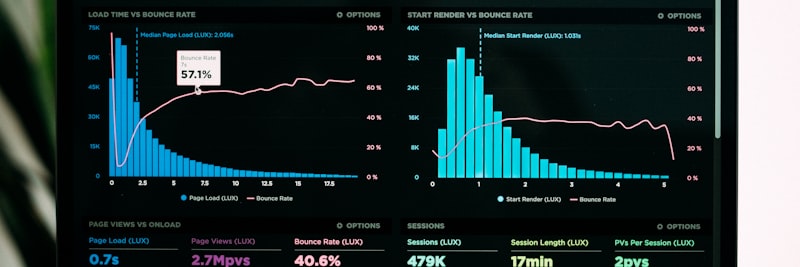
Effective KPIs are metrics that can be translated into action
A KPI (Key Performance Indicator) consists of measurable values that show how close an organization is to its strategic goals. However, not every metric is a KPI. For a metric to be considered a KPI, it must possess the following characteristics:
- Strategic alignment: Must be directly related to high-level goals
- Actionability: Must allow for intervention based on the results
- Measurability: Must be measurable in a clear, repeatable way
- Timeliness: Must be reportable at the right time and frequency
A common issue I encounter in firms across Turkey and the TRNC is that an abundance of metrics leads to a loss of focus. I once saw a manufacturing firm tracking 147 different KPIs; during the board meeting, no one knew which ones were the priority.
Industry-specific KPI requirements vary, but the fundamental design principles remain the same.
Principles for Creating SMART KPIs

The SMART framework transforms vague goals into concrete KPIs
The SMART framework is a proven method for converting vague goals into measurable KPIs:
S – Specific
The KPI must be clear about what it measures. Instead of “increase performance,” it should be defined as “increase production quantity per unit.” Vague expressions leave room for different interpretations.
M – Measurable
It must be expressed as a numerical value or a ratio. Instead of “increase customer satisfaction,” set a concrete goal such as “increase the NPS score from 45 to 55.”
A – Achievable
The goal can be challenging but should not be impossible. Past performance, industry averages, and available resources must be taken into account. Unattainable goals lower motivation.
R – Relevant
It must be directly connected to strategic goals. “Number of website visitors” is not meaningful on its own; it gains value when combined with “conversion rate” or “cost per lead.”
T – Time-bound
It must specify when it will be measured and by what date the goal will be achieved. It should be expressed as “increase sales by 15% by the end of Q3” rather than just “increase sales.”
SMART Transformation Example
Before: “Increase customer satisfaction”
SMART version: “Reduce average customer complaint resolution time from 48 hours to 24 hours to increase the NPS score from the current 42 to 52 by the end of Q3 2026”
Leading vs. Lagging Indicators

A balanced KPI set shows both the past and the future
One of the most critical balances in KPI design is balancing leading and lagging indicators:
Lagging Indicators
These show the results of past performance. They are easy to measure, but the opportunity for intervention is limited.
- Monthly/annual revenue
- Net profit margin
- Customer churn rate
- Production cost
- Employee turnover rate
Leading Indicators
These predict future performance. The opportunity for intervention is high, but they are more difficult to measure.
- Sales pipeline value
- Quote-to-order conversion rate
- Customer satisfaction score (NPS/CSAT)
- Employee training hours
- Number of process non-conformities
Balanced Usage
An effective KPI set includes both types of indicators. Managing with only lagging indicators is like driving a car while looking only at the rearview mirror. Using only leading indicators makes it difficult to verify business results.
Golden ratio (observation): A KPI set should consist of approximately 60% lagging and 40% leading indicators.
Balanced Scorecard Framework

The Balanced Scorecard balances strategy from four perspectives
The Balanced Scorecard (BSC) is a framework developed by Kaplan and Norton that balances strategy from four different perspectives. In KPI design, this approach prevents a one-dimensional (usually financial) perspective.
1. Financial Perspective
“How do we look to our shareholders?”
- Revenue growth rate
- Gross/Net profit margin
- Return on Investment (ROI)
- Cash conversion cycle
2. Customer Perspective
“How do our customers see us?”
- Customer satisfaction (NPS/CSAT)
- Customer loyalty / repeat purchase rate
- Market share
- Customer Acquisition Cost (CAC)
3. Internal Process Perspective
“In which processes must we excel?”
- Overall Equipment Effectiveness (OEE)
- Lead time
- Error/waste rate
- Process accuracy
4. Learning and Growth Perspective
“How do we continue to improve and create value?”
- Employee training hours
- Employee satisfaction
- Innovation rate (revenue from new products)
- Information systems maturity
Connection Between Perspectives
The power of the BSC lies in the cause-and-effect relationship between perspectives. For example: Employee training increases (learning) → Process quality improves (internal processes) → Customer satisfaction rises (customer) → Profit margin increases (financial).
Integrating KPIs with OKRs
OKR (Objectives and Key Results) is a goal-setting framework popularized by firms like Google and Intel. KPIs and OKRs serve different purposes but create a reinforcing effect when used together.
Difference Between KPI and OKR
- KPI: Business-as-usual performance indicators that are monitored continuously
- OKR: Ambitious goals intended to be achieved within a specific period (usually a quarter)
Usage Together
KPIs show “health”; OKRs show “where we are going.” A speedometer on a dashboard is like a KPI, while the goal of “reaching Istanbul in 3 hours” is like an OKR.
Integration Example
KPI: Customer complaint resolution time (continuous monitoring, target: <24 hours)
OKR: “Transform customer support experience in Q2” (Objective) + “Reduce complaint resolution time from 48 hours to 12 hours” (Key Result)
In this approach, the KPI keeps a pulse on daily operations, while the OKR drives ambitious improvement goals.
15 Critical KPIs for the Management Dashboard
The following 15 KPIs are fundamental indicators that senior management in most sectors should track. They should be adapted according to your company’s specific characteristics.
Financial KPIs (5)
- Monthly Recurring Revenue (MRR): Critical for subscription/recurring revenue models
- Gross Profit Margin: Indicator of pricing and cost efficiency
- Net Working Capital Conversion Cycle: Health of cash flow
- EBITDA: Operational profitability
- Revenue / Employee: Indicator of productivity and scalability
Customer KPIs (4)
- Net Promoter Score (NPS): Customer loyalty and referral tendency
- Customer Lifetime Value (CLV): Long-term customer profitability
- Customer Acquisition Cost (CAC): Growth efficiency
- Customer Churn Rate: Retention performance
Operational KPIs (4)
- Overall Equipment Effectiveness (OEE): Production efficiency (availability x performance x quality)
- Lead Time: Customer commitment performance
- First Time Right (FTR) Rate: Quality and rework cost
- Inventory Turnover Rate: Capital efficiency
Human Resources KPIs (2)
- Employee Engagement Score: Leading indicator of motivation and productivity
- Critical Position Fill Rate: Indicator of organizational risk
Dashboard Design Principles
A well-designed dashboard provides insights in seconds
No matter how well KPIs are designed, they lose value if presented incorrectly. Fundamental principles of effective dashboard design:
1. Visual Hierarchy
The most critical KPIs should be placed at the top and to the left. The eye naturally starts from the top left. The answer to the question “What should be seen at first glance?” should be in the upper section of the dashboard.
2. Contextual Presentation
A number alone is meaningless. Every KPI should be presented with the following contextual information:
- Target value
- Comparison with the previous period
- Trend direction (increase/decrease)
- Status color (green/yellow/red)
3. Drill-Down Capability
The ability to move from high-level metrics to details is critical. The information “Sales dropped by 8%” is not enough; one should be able to drill down by region, product group, or customer segment.
Drill-Down Hierarchy Example
Total Revenue → By Region → By Product Group → By Customer → By Invoice
4. Action-Orientation
A dashboard should not just provide information; it should trigger action. When a red indicator is seen, the answer to “what should I do now?” must be clear. This is achieved through alert thresholds and responsibility assignment.
5. Simplicity
A maximum of 12-15 KPIs should be displayed on a dashboard. Anything more creates information overload. Edward Tufte’s “data-ink ratio” principle applies: every pixel should carry information, not decoration.
6. Real-Time Capability
Operational KPIs should be real-time whenever possible, or at least updated daily. KPIs updated weekly or monthly prevent proactive management, leading to reactive behavior instead.
Field Example: Production Firm KPI Transformation

Situation
A metal processing firm with 180 employees. 2 production facilities, 45 machines, 120+ customers. Current situation: Excel reports, different metrics from each department, 3-hour report presentation at the monthly management meeting. Senior management complains that they “cannot see the forest for the trees.”
KPI Design Process (representative duration: 6 weeks)
- Weeks 1-2: Strategy workshop – 3-year goals and critical success factors were determined
- Weeks 2-3: Existing 87 metrics were reviewed, 62 were eliminated (no strategic connection, cannot be measured, redundant)
- Weeks 3-4: 15 senior management KPIs and 35 department KPIs were determined using the Balanced Scorecard framework
- Weeks 4-5: Data sources were defined, automated extraction processes were established
- Weeks 5-6: Dashboard design, drill-down structure, and alert thresholds were determined
Result (observed, after 6 months)
- Management meeting duration: From 3 hours to 45 minutes
- Decision-making speed: From an average of 2 weeks to 3 days
- Production efficiency via OEE tracking: +12 points
- Employee engagement: “I know my KPI” rate increased from 28% to 91%
7 Most Common Mistakes in KPI Design
1. Setting Non-Measurable Goals
Expressions like “being customer-oriented” or “increasing quality” are not KPIs. Every goal must be expressed numerically or as a ratio. Otherwise, success or failure cannot be defined.
2. Tracking Too Many KPIs
A firm tracking 147 metrics is effectively tracking none of them. Information overload leads to a loss of focus and “analysis paralysis.” 12-15 KPIs are sufficient for senior management.
3. Using Only Lagging Indicators
Result metrics like revenue, profit, and cost are important but are delayed indicators. They report on a situation that has already occurred. Proactive management is impossible without leading indicators.
4. Failing to Connect KPIs with Strategy
The “everyone is measuring, so let’s measure too” approach. Why this metric? Which strategic goal does it serve? If there are no answers to these questions, you are just tracking statistics, not KPIs.
5. Not Defining Target Values
Is “OEE: 72%” good or bad on its own? A KPI is meaningless without a target. The target should be determined based on past performance, industry benchmarks, and strategic intent.
6. Not Defining KPI Ownership
The principle that “what everyone is responsible for, no one is responsible for.” Each KPI must have a single owner. This person is authorized and responsible for monitoring, analyzing, and taking improvement actions for the metric.
7. Not Updating the Dashboard
Even the best-designed KPI set becomes obsolete. Strategy changes, market conditions shift, and new competitive dynamics emerge. The KPI set should be reviewed at least once a year.

Wrong KPIs lead to wrong decisions
KPI System Success Metrics
Use the following metrics to evaluate the effectiveness of your KPI system (representative values):
| Metric | Baseline | Target | Measurement Method |
|---|---|---|---|
| KPI awareness rate | 30% | 90%+ | Employee survey: “Do you know your KPI?” |
| Dashboard usage frequency | Monthly | Daily | System access logs |
| Data update latency | 7+ days | <24 hours | Data timestamp check |
| Management meeting duration | 3+ hours | <1 hour | Meeting records |
| Decision-making speed | 2+ weeks | <3 days | Decision tracking system |
| KPI target achievement rate | 40% | 70-80% | End-of-period KPI evaluation |
| Action conversion rate | 20% | 80%+ | Time from red KPI to action |
These metrics show the “health” of your KPI system. They should be evaluated at least twice a year.
KPI Design Checklist
Check the following items when designing or reviewing your KPI system:
A. Strategic Alignment
- Company strategy and 3-5 year goals documented
- Critical success factors (CSF) determined
- Each KPI mapped to at least one strategic goal
- KPI hierarchy (company → department → individual) established
B. KPI Definition
- Each KPI meets SMART criteria
- Leading and lagging indicators balanced (40%-60%)
- Balanced Scorecard 4 perspectives represented
- Senior management KPI count between 12-15
- Single owner defined for each KPI
C. Data and System
- Data sources defined and accessible
- Data quality verified (missing, erroneous, inconsistent data check)
- Automated data extraction process established
- Update frequency and timing determined
D. Dashboard and Presentation
- Visual hierarchy created (important KPIs at the front)
- Target, trend, status color defined for each KPI
- Drill-down capability planned
- Mobile access provided
- Alert/notification thresholds determined
E. Governance and Continuity
- KPI review meeting calendar created
- Annual KPI set review process defined
- Employee training planned and implemented
- Success and improvement stories shared
This checklist can be expanded according to your industry-specific needs.
Frequently Asked Questions (FAQ)
Get Support for Your Project
I can help guide your digital transformation initiative. Book a free preliminary call to discuss your priorities.