Standard Operations in Multi-Branch Structures: Where Does Branch Autonomy End?
What is a Multi-Branch Structure?

Several locations, all expected to move in step and speak the same language
Multi-branch operations management is what you do when a single business runs across more than one physical location (branches, warehouses, factories, stores, regional offices) and its processes, data, and resources have to stay coordinated rather than drift apart.
In practice, these structures show up in a few different forms:
- Multi-branch: Different locations under the same legal entity (retail chains, bank branches)
- Holding structure: Group companies with different legal entities (parent company + subsidiaries)
- Franchise system: The relationship between independent operators (franchisees) and the parent company (franchisor)
- Distribution network: Central production + regional warehouses + dealers
Why is it Complex?
In a single-location firm, everything sits under one roof and most problems get solved at the next desk over. A multi-branch structure changes that:
- Each location may have different customers, suppliers, and competitive conditions
- Local regulatory differences (especially across different countries) affect decision-making
- Physical distance complicates communication and coordination
- Given time, each branch tends to grow its own “best practices”
This complexity turns up in much the same way across nearly every multi-branch structure, regardless of the industry.
Centralized vs. Decentralized Structures

Where the decision gets made is really what defines the model
The core question in any multi-branch structure is simple: where do decisions get made? There are two extremes, with a range of hybrid models sitting between them:
Full Centralized Management
Every decision is made at the center; branches only execute:
- Prices are set by the center; the branch cannot change them
- Procurement requests are sent to the center; the center places the order
- Inventory policies (minimum, maximum, reorder point) are centralized
- Personnel hiring requires central approval
- Marketing campaigns are conducted through central planning
Advantages: Consistency, economies of scale, ease of control, brand integrity
Disadvantages: Slow decision-making, missing local opportunities, loss of motivation
Full Decentralized Management
Here each branch is the boss of its own business:
- Branches set their own prices
- Local supplier selection is free
- Stock levels are at the branch’s discretion
- Personnel hiring is managed by the branch manager
- Autonomy in local marketing decisions
Advantages: Fast decisions, local adaptation, entrepreneurial spirit
Disadvantages: Inconsistency, inability to benefit from economies of scale, control difficulties
Hybrid Model (Recommended)
Most successful multi-branch structures land somewhere in between and adopt a hybrid model:
| Decision Area | Centralized | Branch Authority |
|---|---|---|
| Brand and Corporate Identity | Fully centralized | None |
| Product Range (Core) | Central determination | Local additional products (with approval) |
| Pricing | Floor and ceiling prices | Free within the band |
| Procurement | Strategic supplier agreements | Free below a certain limit |
| Personnel | Managerial appointments | Operational staff |
| IT Systems | Infrastructure and ERP | Local devices and connectivity |
Tip
In a hybrid model, write down exactly where the branch is free and where the center decides. Leave that line vague and you will see the frustration surface at both ends.
Inter-Company Transactions

Every movement inside the group should leave a trace on both sides
Transactions between different legal entities, what people call inter-company movements, are among the trickiest parts of any multi-branch ERP setup.
Types of Inter-Company Transactions
- Stock transfer: Sending goods from one company’s warehouse to another
- Internal sales: Sale of goods/services between group companies
- Cost sharing: Distribution of central services (IT, accounting, marketing)
- Financing: Intra-group loans and interest transactions
- Royalties: Brand or technology usage fees
Inter-Company Configuration in the ERP
A properly configured multi-branch ERP should give you:
- Automatic offsetting entries: When Company A sells goods to Company B, revenue and receivables post in A while expenses and payables post in B, without anyone keying it twice
- Transfer prices: The pricing policy to be used in intra-group sales is defined
- Stock tracking: Transit stock, goods in transit, and receiving processes are clear
- Reconciliation: Balances between group companies are periodically verified
Transfer Pricing Considerations
Transfer prices are one of the first things tax authorities look at closely:
- Prices must comply with the “arm’s length principle”
- Documentation requirement: Why was this price determined?
- Tax rates in different countries can lead to accusations of profit shifting
- The necessity of preparing annual transfer pricing reports
Caution
Setting a zero or sky-high profit margin in inter-company transactions just to “keep it simple” is exactly what turns a tax audit into a headache. Build your transfer pricing policy together with a financial advisor before it becomes a problem.
SOP and Standard Operating Procedures

The written answer to “how do we actually do this here?”
An SOP (Standard Operating Procedure) spells out, step by step, how a specific task gets done. In a multi-branch structure, SOPs are how you hold the same quality across locations, replacing each branch’s personal habits with a shared way of working.
The Importance of SOPs
- Consistency: The same experience for the customer regardless of which branch they visit
- Ease of training: New personnel adapt quickly
- Quality control: Deviations from the standard can be detected
- Continuous improvement: Just writing down what you already do tends to surface the things worth improving
Which Processes Require SOPs?
In multi-branch structures, the areas to write up first are usually:
- Customer service: Complaint management, return procedures, greeting standards
- Sales processes: Quote preparation, order approval, invoicing
- Inventory management: Goods receipt, counting, transfer requests
- Cash operations: Opening/closing, cash management, end-of-day reconciliation
- Emergencies: Fire, theft, system failure
Principles for Preparing SOPs
- Simple and clear language: Use expressions everyone can understand instead of jargon
- Visual support: Flowcharts, screenshots, photographs
- Clarity of responsibility: Who will do what, and when?
- Exception management: What happens when the standard is deviated from?
- Version control: It is clear which version is the latest
Operations Management in the Franchise Model

Franchising is a constant negotiation between the standard and local drive
Franchising is a particular flavor of multi-branch operation. The franchisor supplies the brand, the system, and the know-how; the franchisee puts up the investment and takes on running the place day to day.
Control Mechanisms in Franchising
1. Operations Manual
The comprehensive document that acts as the franchise system’s “constitution.” It sets the standard for pretty much everything:
- Store opening/closing hours
- Personnel dress code
- Product presentation and customer interaction
- Compliance with the supply chain
2. Training Programs
Mandatory training for the franchisee and their employees:
- Initial training (before the franchise opening)
- Continuous training (new products, system updates)
- Certification programs
3. Audit and Evaluation
Periodic field visits and performance measurement:
- Mystery shopper evaluations
- Operational audits (checklist-based)
- Financial performance tracking
- Customer satisfaction measurements
4. Technology Platforms
Control through centralized systems:
- POS integration (flow of sales data to the center)
- Inventory management system (centralized ordering)
- CRM (sharing customer data)
- Communication platforms (announcements, training, support)
Franchisee Freedom and Its Limits
The franchise systems that work protect brand integrity without smothering the franchisee under too much control. Getting that balance right is most of the craft:
| Area | Typical Franchisor Control | Typical Franchisee Freedom |
|---|---|---|
| Product Range | Core products mandatory | Local additional products (with approval) |
| Prices | Recommended price list | Adjustments based on local competition |
| Procurement | Approved supplier list | Special needs outside the list |
| Marketing | Brand usage rules | Local activations |
| Working Hours | Minimum hours | Decision to extend |
Consolidation and Reporting
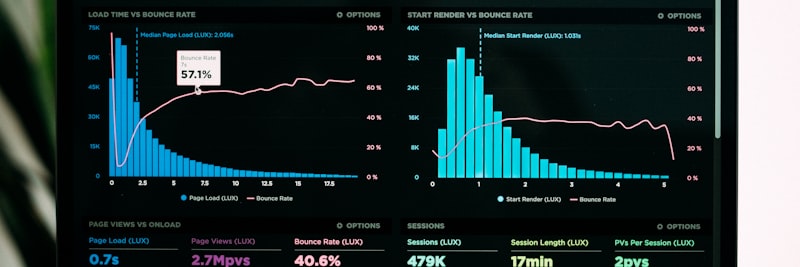
Pulling the scattered pieces together onto one screen
Consolidation reporting is the work of combining the financial and operational data of multi-branch structures or group companies into a single view.
Reasons for Consolidation
- Management decisions: To see the total performance of the group
- Legal obligation: Groups of a certain size must prepare consolidated financial statements
- Investor/bank demands: Financiers want group-based information
- Performance comparison: Benchmarking between branches/companies
Consolidation Steps
- Data collection: Extracting financial and operational data from each unit
- Standardization: Harmonizing different charts of accounts or units of measurement
- Currency conversion: Converting data in different currencies into a common currency
- Elimination of internal transactions: Removing intra-group trades (otherwise, turnover appears inflated)
- Creation of consolidated statements: Combined balance sheet, income statement, cash flow
Consolidation Features in the ERP
In a modern multi-branch ERP, you would expect:
- Real-time consolidation: Daily view without waiting for month-end
- Drill-down: Descending from consolidated figures to a single branch
- Automatic elimination: System-driven removal of inter-company transactions
- Multi-dimensional: Reporting based on branch, region, country, or business line
- Scenario analysis: Forecasting with different exchange rates or assumptions
Tip
A consolidation report is only ever as good as the data underneath it. Every branch has to run the same chart of accounts, the same coding standards, and the same closing calendar; let one drift and the numbers drift with it.
Field Example: Distribution Chain Case

Situation
A wholesale distribution firm with 8 branches across 3 cities. Head office + 5 regional warehouses + 2 showrooms. Each branch ran on its own system, and month-end consolidation was eating up 10 days. Stock transfers between branches were handled over phone and email, and things went missing.
Steps Taken (Representative duration: 6 months)
- Months 1-2: Current process mapping of all branches; exceptions and differences were documented
- Months 2-3: A central vs. branch authority matrix was created (price band, stock limit, procurement authority)
- Months 3-4: Transition to a single ERP system, inter-company configuration, automatic transfer pricing
- Months 4-5: SOP documents were prepared: order taking, transfer requests, customer returns, cash operations
- Months 5-6: Go-live, training, parallel period, activation of consolidation reports
Results (Observed)
- Month-end closing time: 3 days instead of 10 days
- Inter-branch stock transfer time: 12 hours instead of an average of 48 hours
- Transfer loss (lost/damaged products): from a representative 2.5% to 0.8%
- Consolidated report preparation: Automatic in 1 business day instead of 5 business days
- Customer complaints due to branch price inconsistency: representative 60% reduction
7 Most Common Multi-Branch Operation Errors
1. Using Different Product Codes in Each Branch
When master data isn’t managed centrally, the same product ends up recorded under different codes in different branches. Reporting becomes impossible and stock visibility evaporates.
2. Determining Transfer Prices Arbitrarily
The “what does it matter, it’s ours anyway” approach to intra-group sales is what earns serious penalties in a tax audit. Arm’s length documentation is a must.
3. Assuming “Everyone Knows” Without SOPs
With no written procedure, every branch runs its own interpretation. And when someone leaves, the institutional memory walks out with them.
4. Leaving Center-Branch Authority Limits Vague
In which areas is the center authorized, and in which is the branch? Uncertainty leads to either decision paralysis or unauthorized decisions.
5. Using Different Charts of Accounts for Consolidation
If each branch uses its own chart of accounts, consolidation turns into manual mapping, with all the error risk and lost time that brings.
6. Ignoring Internet Dependency
One internet outage in a centralized cloud system and work stops dead at the branch. Plan offline scenarios and a backup connection ahead of time.
7. Trying to Transform All Branches at Once
A big bang transition can be a disaster in a multi-branch structure. A pilot branch plus a gradual rollout is far safer.

Every one of these errors multiplies the operational tangle
Multi-Branch Operation Success Metrics
To see whether your multi-branch operations are actually working, track the following metrics (values are representative):
| Metric | Baseline | Target | Measurement Method |
|---|---|---|---|
| Month-end closing time | 10+ business days | 3-5 business days | From last transaction date to report date |
| Inter-company reconciliation mismatch | >5% | <0.5% | Contra account differences / total volume |
| Stock transfer time (inter-branch) | 48+ hours | <24 hours | Time between request and delivery |
| SOP compliance rate | Not measured | >90% | Audit results |
| Branch-based price inconsistency | >10% | <2% | Price difference for the same product across branches |
| Consolidated report preparation time | 5+ business days | <1 business day | Report ready after closing |
| Master data consistency | <80% | >98% | Unique product/customer record rate |
Track these metrics monthly and benchmark them branch by branch.
Multi-Branch Operation Checklist
Run through the items below to see where your multi-branch operations management stands:
- Is the central vs. branch authority matrix documented?
- Is responsibility clear for every decision area?
- Is the delegation of authority procedure defined?
- Is the exception management process specified?
- Are all branches on the same ERP system?
- Is master data managed centrally?
- Is the chart of accounts standard across the entire structure?
- Are inter-company transactions automatic?
- Is consolidation real-time?
- Are SOPs available for critical processes?
- Are SOPs up-to-date and accessible?
- Do new personnel receive SOP training?
- Is SOP compliance periodically audited?
- Is the transfer pricing policy written?
- Is the arm’s length documentation ready?
- Is intra-group reconciliation performed periodically?
- Is the stock transfer process systematic?
- Are consolidated financial statements ready on time?
- Is branch performance comparison being conducted?
- Is drill-down capability available?
- Are exception reports (price diff, stock diff) monitored?
Frequently Asked Questions (FAQ)
Get Support for Your Project
I can help guide your digital transformation initiative. Book a free preliminary call to discuss your priorities.